


News coming from the National Center for Health Statistics in Atlanta (USA) regarding the trends in liver cancer mortality rates (1) are not among those that bring joy or paint a picture that goes against the media narrative claiming that “victory over cancer” is just “a few years away.” Quite the opposite.
Overall, the age-adjusted mortality rate for liver cancer increased by 43%, from 7.2 to 10.3 per 100,000 adults between 2000 and 2016 (P <0.05). Mortality rates increased significantly for both men and women. For men, the rate rose by 43%, from 10.5 to 15 per 100,000 over 17 years (P <0.05). For women, the rate increased by 40%, from 4.5 to 6.3 per 100,000 (P <0.05).
Rising incidence and mortality rates for liver cancer
These data should be considered alongside the rising incidence of the disease, that is, the number of patients diagnosed with liver cancer annually. According to the Surveillance, Epidemiology, and End Results (SEER) program of the National Cancer Institute in Washington, liver cancer incidence rates increased on average by 2.6% per year from 2006 to 2015, and liver cancer mortality rates rose by an average of 2.5% annually during the same period.
In other words, the increase in mortality is primarily attributable to a sharp rise in incidence. This trend highlights, on one hand, the ineffectiveness of current therapeutic strategies, which evidently have not translated into improved survival rates. On the other hand, the rising incidence indicates that little has been done to counteract the risk factors underlying liver cancer.
New research for tumor treatment: tumor reversion induced by specific fish peptides
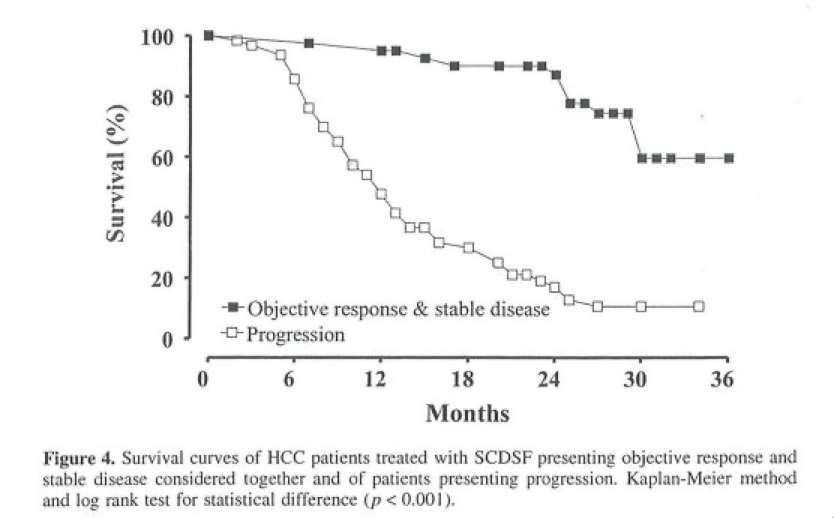
The ineffectiveness of currently used therapies clearly indicates the need to pursue new paths in treating hepatic carcinoma, experimenting with solutions already proposed by pilot studies that aim to induce tumor phenotype reversion through a set of compounds capable of epigenetically modifying the neoplasia.
One such study was published by Livraghi et al. (2), which showed how treatment with Zebrafish extracts can induce a significant response and increase survival in a large fraction of patients with terminal-stage liver cancer who were refractory to all other conventional therapies. (For more information, visit www.oncovita.it)
More effective prevention programs and stricter food safety controls are needed
The rise in incidence indicates that the spread of major risk factors for liver cancer is far from being under control. Among these factors, hepatitis B and hepatitis C stand out. Hepatitis B is associated with a 100-fold increased risk of liver cancer compared to the uninfected population.
Similarly, hepatitis C virus carriers have a risk 17 times higher than average. Alcohol consumption, diabetes, and obesity are also significant risk factors that can synergistically increase oncologic risk among hepatitis virus carriers.
A special mention goes to the dramatic increase in liver cancers in Asia (especially China), essentially due to contamination of cereals and other foodstuffs with aflatoxins produced by the fungus Aspergillus flavus. Fungal infestation could be reduced or eliminated if strict standards for food storage and control were followed, as is currently done in the USA and Europe.
Overall, these are largely preventable elements, both by implementing well-planned hepatitis vaccination programs and by preparing effective food education and information projects aimed at combating the devastating epidemic of obesity and diabetes (3). However, given the persistent underestimation of prevention by health authorities, it is doubtful that these recommendations will be followed and translated into an effective healthcare intervention program. But it is certainly never too late to encourage autonomous awareness among citizens.
References
1) Liver Cancer Deaths Trending Upward.