News

Where are Biological Sciences Going?

The natural world consists of hierarchical levels of complexity that range from subatomic particles and molecules to ecosystems and beyond. This implies that, in order to explain the features and behavior of a whole system, a theory might be required that would operate at the corresponding hierarchical level, where self-organization processes take place. Historically, biological research has (mostly) focused on questions that could be answered by a reductionist program of genetics. The organism (and its development) was considered an epiphenomenon of its genes. However, the awareness of the limits reached by the strictly reductionist approach in biological sciences became almost a common place in scientific community and a profound rethinking of the biological paradigm is now underway.

Still controversial is the nature of the strategies to get rid of this bottleneck. Some are confident that the brute force of big data can give the solution ‘for free’ by the simple ‘rational organization’ of raw information. Yet, besides the relevance of new computer-based tools, it is unlikely that mere technological improvement could give any relevant solution. Indeed, what we need is a conceptual revolution.

This ‘paradigm change’ will have profound scientific and philosophical consequences, given that it implies the search for general principles on which a cogent theory of biology might rely.

Because much of the logic of living systems is located at higher levels, it is imperative to focus on them. Indeed, both evolution and physiology work on these levels. A Systems Biology approach is needed to catch such a complexity. Accordingly, this new perspective will entail epistemological and methodological issues as well. Thereby, Systems Biology cannot be considered a ‘simple’ ‘gradual’ extension of Molecular Biology. In this light the explanatory import of experiments and simulations should be reconsidered too for the biological sciences.

This is the ‘vision’ underlying the upcoming meeting “Where are the biological sciences going”. In these three Roman days, physicians, biologists, physicists, mathematicians and philosophers will share their ideas on this ‘organism centered’ biology to come.

Download program here » Where are Biological Sciences Going?

Discover the event here » Meeting

Jul
30
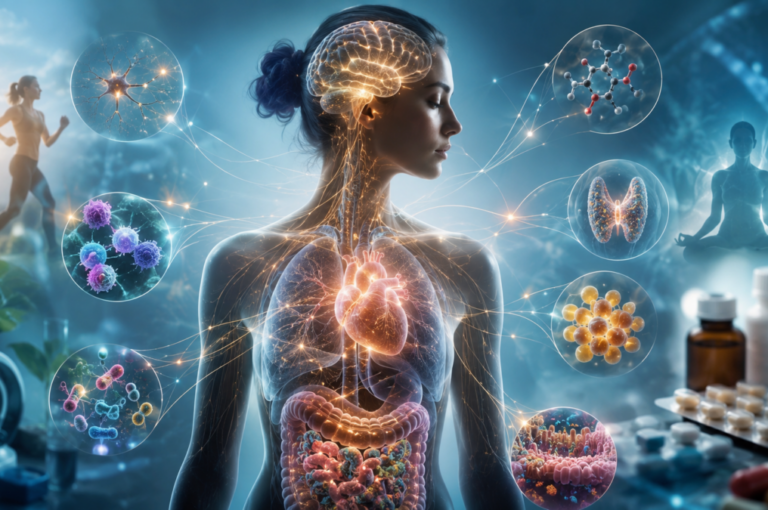
Human body with interconnected brain, nervous system, immune system, endocrine system, metabolism and gut microbiota.

Systems Biology: Understanding Health in All Its Complexity

For more than a century, medicine has made extraordinary progress thanks to an analytical approach that has enabled us to gain an increasingly detailed understanding of organs, cells, genes, and…

Read More
Sep
19

Innovating Space Research: ASI President Visits Space Factory

Thursday, September 11 was a significant day for the “Space Factory” group, marked by the visit of the President of the Italian Space Agency (ASI), Professor Teodoro Valente, to the…

Read More
Sep
04

The Battle for the Skies: Why Europe Must Embrace a Space Revolution

By Prof. Mariano Bizzarri, Head of the Systems Biology Group Space is the driving force behind some of today’s most crucial technological innovations — from cybersecurity and artificial intelligence to…

Read More
Sep
03

Science is doubt, enough with obligations - by Mariano Bizzarri

In an article for the newspaper La Verità dated August 22, 2025, Mariano Bizzarri, professor at the Department of Experimental Medicine at La Sapienza University of Rome, argues that science…

Read More
Sep
01

Exploring the moon together: highlights from the SGAC european workshop

Organized by the Space Generation Advisory Council (SGAC), the workshop brought together 140 students and young professionals from across Europe, creating a highly stimulating environment to discuss future lunar exploration…

Read More
Jun
27

"Tumor Reversion" – Re-educating Cancer: Studies Led by Professor Mariano Bizzarri

In recent years, a new frontier in oncology has opened up promising new hopes: "Tumor Reversion," the possibility to reprogram tumor cells to revert to a normal or less aggressive…

Read More
Jun
05

MicroRNA breakthrough at Sapienza: pioneering new frontiers in tumor reversion research

The Systems Biology Group Lab of the Department of Experimental Medicine at Università La Sapienza in Rome, led by Professor Mariano Bizzarri, in collaboration with Aurora Biosearch, a leading company…

Read More
May
24

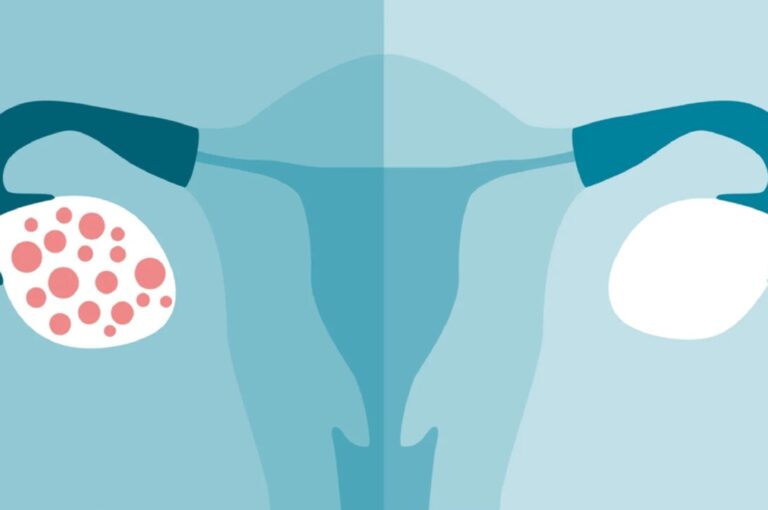
Polycystic Ovary Syndrome and Inositols: What Does Science Say? The Latest Discoveries

A new study opening up therapeutic possibilities has been conducted and published in the scientific journal "Dovepress", by the Systems Biology Group, a laboratory led by Professor Mariano Bizzarri. The…

Read More
May
17

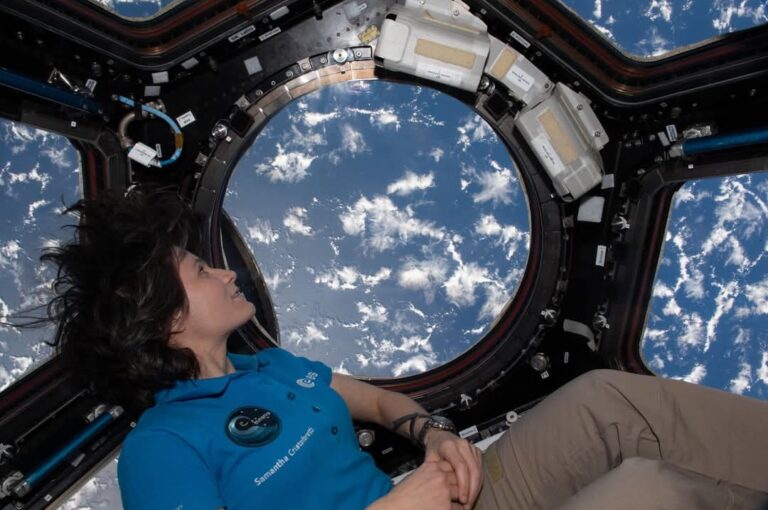
How Microgravity Impairs Endocrine Signaling and Women's Reproductive Health

Research is one of the most significant aspects that distinguishes the Systems Biology Group, a space biomedicine laboratory led by Professor Mariano Bizzarri. In recent days, a new study conducted…

Read More
Apr
30

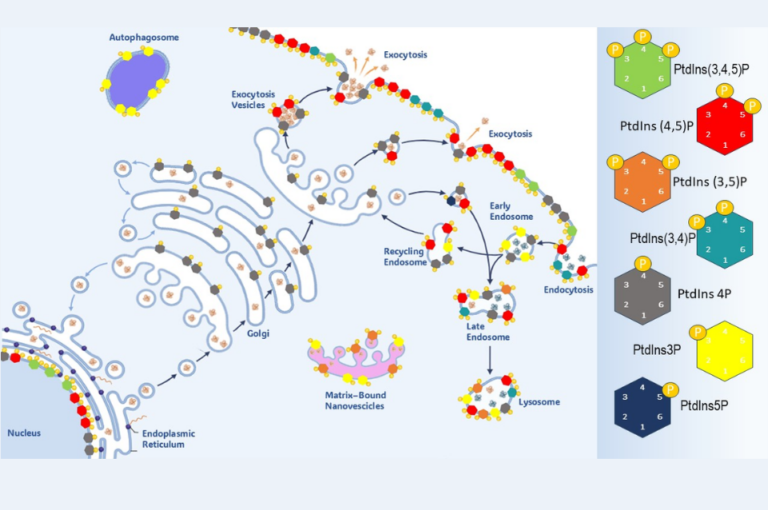
Inositol and the PIP2/PIP3 Balance: A Crossroad for the Biodynamic Interface Between Cells and Their Microenvironment

A study published in the journal "Biomolecules", conducted by the team from the Space Biomedicine Laboratory at Università La Sapienza in Rome led by professor Mariano Bizzarri, and primarily conducted…

Read More
Apr
28

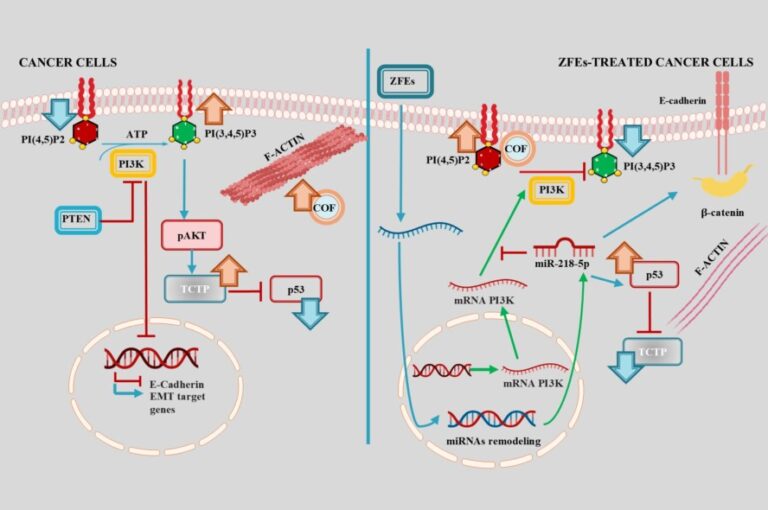
Zebrafish Study and Breast Cancer: Research Explaining How microRNAs Inhibit Tumor Migration

The study “miRNAs from Zebrafish Embryo Extracts Inhibit Breast Cancer Invasiveness and Migration by Modulating miR-218-5p/PI3K Pathway", published in the journal “International Journal of Molecular Sciences”, conducted by the team…

Read More
Apr
17

Rome Hosts First National Course in Space Medicine and Human Factors

Space Medicine and Human Factors Course Held in Rome from March 3 to 7 The first course on space medicine and human factors was held from March 3 to 7…

Read More
Apr
17

The Next Antibiotics Will Come From Space

Space Research in Rome: A New Horizon for Pharmaceuticals The National Laboratory of space Biomedicine at "Sapienza" University of Rome stands as a privileged observatory on the most advanced frontiers…

Read More
Apr
17

New Kostaive Vaccine: Few Tests, Too Many Risks

The Self-Amplifying Technology of the Kostaive Serum Remains Unexplored, Yet Risks to Healthy Individuals Have Been Overlooked. Before the drug is commercialized, institutions must initiate investigations conducted by researchers without…

Read More
Jan
28

Space: A New Frontier For Therapeutic Innovation

In articles published on January 22, 2025 in the daily newspaper "La Verità" and the magazine "Panorama", the importance of experiments conducted on the International Space Station (ISS) is emphasized…

Read More
Nov
15

Afshin Beheshti at the Sapienza University of Rome

Afshin Beheshti as guest star at the Sapienza University of Rome November 20th, 2024 at 10.30 Sala del Chiostro - Facoltà di Ingegneria Civile e Industriale in Rome (Via Eudossiana…

Read More
Mar
07

Summer School in Theories in Biology, Development and Cancer

Obiettivi formativi The School envisages the final release of a total of CFUs of 10 (250 hours total work for students, calculated as formal lectures and workout-discussion exercises). A certificate…

Read More
Jun
29

A new (mathematical) look into biology

SIMAI 2018 - Sapienza Università di Roma July 2, 2018 - July 6, 2018   The Mini-Symposium entitled Attempts of a mathematical uprising for restructuring biomedical sciences is scientifically organized…

Read More